🤖 What Is Artificial Intelligence and How It’s Transforming the Job Market
📌 Introduction:
Artificial Intelligence and the New Job Market Reality
When I first heard the term Artificial Intelligence (AI), I imagined futuristic robots replacing humans in every job. It sounded exciting… and honestly, a little scary.
Back then, my mental image was closer to a sci-fi movie than the reality we live in today. Over the years, however, I’ve learned that AI is not just about replacing people—it’s about reshaping the way we work, opening doors to opportunities we couldn’t have imagined before.
This shift is not a distant future scenario—it’s happening now. From recruitment to productivity tools, AI is transforming every stage of the employment lifecycle. Whether you’re a recent graduate or a seasoned professional, understanding this transformation is the key to staying competitive in a market where change is the only constant.


💡 What Is Artificial Intelligence? A Clear Definition
Artificial Intelligence refers to the ability of machines and software to perform tasks that normally require human intelligence—things like learning, reasoning, problem-solving, perception, and decision-making.
There are two main categories:
-
Narrow AI – Designed for specific tasks (e.g., resume screening, chatbots, language translation).
-
General AI – Still theoretical, capable of performing any cognitive task a human can.
What makes AI so relevant today is the combination of massive data availability, advanced algorithms, and powerful computing resources. Together, these factors have taken AI from research labs into our everyday work lives.

🚀 How AI Is Reshaping the Job Market
The impact of AI on the job market is profound. I’ve personally witnessed three major changes:
- ⚡ Faster Job Matching – Platforms now use AI to match candidates with roles that fit their skills—sometimes before the job is even posted publicly.
- 🎯 Skill-Based Hiring – Companies are relying less on degrees and more on skill assessments powered by AI simulations.
- 🌍 Remote Work Explosion – AI tools make global collaboration easier, creating access to jobs that were once out of reach.
Beyond my own experience, studies show AI is shifting demand toward analytical thinking, creativity, and emotional intelligence, while automating repetitive or rule-based tasks (World Economic Forum Report).

📈 From Automation to Opportunity: Jobs Being Created by AI
It’s true—AI automates certain roles. But it also creates entirely new categories of work:
-
AI Trainers & Prompt Engineers – Fine-tune AI models.
-
Data Annotators – Ensure AI systems learn correctly.
-
Ethics & Compliance Experts – Guide responsible AI adoption.
When I started using AI-powered resume tools to optimize for Applicant Tracking Systems (ATS), I saw firsthand how technology could be a career accelerator rather than a threat. The same principle applies globally: those who adapt early gain an edge.

⚠️ Jobs at Risk: Understanding the Displacement Effect
We can’t talk about AI without acknowledging job displacement. Roles based heavily on routine tasks—such as data entry clerks, basic transcriptionists, or some customer service positions—are vulnerable.
However, vulnerability doesn’t mean inevitability. The people who transition to AI-augmented roles, where human judgment and creativity combine with machine efficiency, are the ones who remain competitive.
📋 AI in Recruitment: Faster, Smarter Hiring Processes
AI has revolutionized hiring:
-
Resume screening algorithms filter thousands of applications in seconds.
-
Chatbots handle applicant FAQs and scheduling.
-
Predictive analytics forecast candidate performance based on historical data.
I personally benefited when I discovered AI tools that tailored my resume to specific job descriptions, making it more visible to ATS filters. Almost immediately, I started receiving interview calls.
🎯 Skill-Based Hiring and the Rise of AI-Powered Assessments
Instead of focusing solely on degrees, companies are turning to AI-driven simulations and real-time skill tests.
For example:
-
Marketing candidates might run a simulated ad campaign.
-
Software engineers solve algorithmic challenges under timed conditions.
This trend widens the talent pool and benefits career changers—like I once was—who have skills but not the “traditional” background.
🏠 The Remote Work Revolution Enabled by AI
AI has been a silent driver behind the remote work boom. Tools like:
-
Automated transcription
-
Virtual whiteboards with real-time translation
-
AI-powered project management platforms
…have made distributed teams highly effective.
In my career, these tools opened international opportunities without requiring me to relocate—something unthinkable a decade ago.

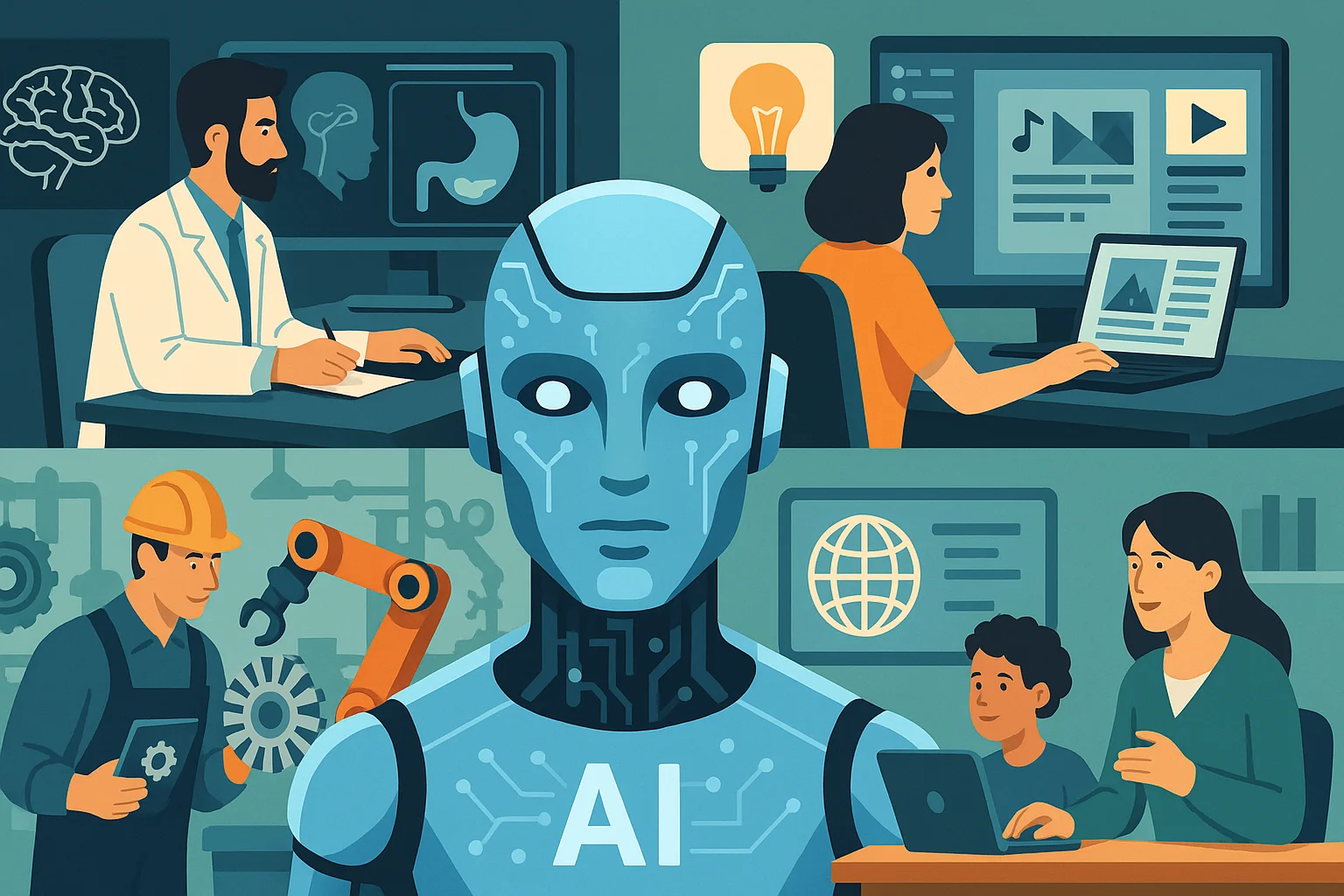
🌐 AI Beyond Tech: Impact Across All Industries
While AI originated in tech, today it’s everywhere:
-
Healthcare – From diagnostic imaging to drug discovery (NIH AI in Medicine).
-
Creative industries – AI assists in design, writing, and music production.
-
Manufacturing – Predictive maintenance and quality control.
-
Education – Personalized learning paths for students.
I’ve seen graphic designers use AI to brainstorm layouts, writers speed up drafting, and marketers analyze market shifts in minutes.
🧠 The Mindset Shift: Thriving in an AI-Driven Workplace
The biggest lesson I’ve learned? AI won’t replace you—but someone using AI might.
To succeed:
-
Stay curious.
-
Integrate AI tools into your workflow.
-
Automate repetitive tasks to focus on high-value work.
This mindset transformed my career from feeling stuck to feeling empowered.
📚 Upskilling and Reskilling for the AI Economy
The most valuable skills in an AI-driven economy include:
-
Critical thinking
-
Data literacy
-
Creativity & adaptability
-
Emotional intelligence
Investing in these skills ensures long-term career resilience, no matter how the market evolves.
🔮 Future Outlook: The Next Decade of AI in the Job Market
Expect to see:
-
More hybrid human-AI roles.
-
Stronger ethical AI regulations.
-
Broader global job access through remote collaboration tools.
❓ Frequently Asked Questions (FAQs)
1. Will AI replace all jobs?
No. AI will automate some tasks, but it also creates new opportunities for those who adapt.
2. What careers are safe from AI?
Jobs requiring creativity, emotional intelligence, and complex decision-making are less likely to be replaced.
3. How can I prepare for an AI-driven job market?
Focus on continuous learning, AI tool adoption, and developing soft skills.
✅ Conclusion: AI as an Ally, Not an Enemy
From my early fears of robot takeovers to using AI daily as a career partner, my journey reflects a larger truth: AI is transforming not just the job market—but the way we think about work, skills, and opportunity.
Those who thrive will see AI as a collaborator, leveraging it to amplify strengths, expand reach, and build a future-proof career.